Shahzada Yaqoot Blog Assignment Week 4. ENG-355
The theme of the Week: a. Native America Oratory
b. Spirituality and Native American Literature.

The study of Native American Culture is a fascinating subject. There are so many facets of the culture that one can study. The origin of the Navajo people, according to the tradition, is that 12 supernatural beings first came and inhabited the planet earth. They then carved out the world to make a place for human beings. The first family on earth was established by the first man who had an arrowhead in his hands to conduct ceremonies started designing the world by cutting it to make the mountains and the seas. The first woman, a boy, and the first girl, all formed supernaturally, started to design the earth for their habitation by carving out the long stretches of mountains, seas, and rivers. They called wind, fire, rain, sand, and other objects around them as spirits and believed they could commune with them and ask for their help (McPherson, R. S. 2010). It is interesting to know that all traditional beliefs about the origin and design of the earth are geographically limited to the US territory.
The traditional beliefs of the Navajo Indians about their origin are contrary to the scientific evidence.
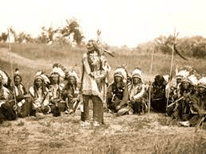
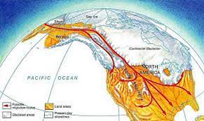
The scientific finding of the origin of the Navajo Indians is that they migrated from Asia on foot in pursuit of food. There was a thin stretch of land that connected the present North American continent to the Asian mainland. The original people were hunters, gatherers, and fishermen. They moved from place to place and would follow the food resources. It is believed, that the Original Indians followed the herds of buffalo that were migrating overland from the continent of Asia to the North American continent.
The scientific theory of mass migration over land makes more sense. However, the scope of this blog is to study the culture and the traditions that the Navajo Indians have practiced in North America. At one time, their population exceeded ten million people. Still, it was significantly reduced by coming Europeans who had to fight them to occupy the land to establish the new world.
It is estimated that there are still one hundred and thirty different tribes living in the United States, where they are given the status of a sovereign nation(s)
https://www.data.gov/climate/tribal-nations/tribal-nations-maps
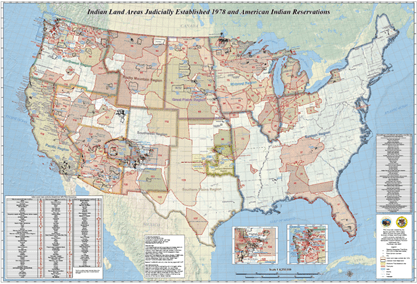
Classroom activity:
Identify if any Navajo Indian tribes live in your state. Name them and explain where do they live and how big their reservation is. Explain in an essay of 500 words what kind of work do they do, what school systems do they have, and how they have adapted to the modernization of the present world.
Traditional Beliefs.
The Indian culture has a strong attachment to nature. They believe that all-natural things that exist are spirits that can be pleased or can also be annoyed if not obeyed. Therefore, lightning, clouds, wind, fire, mountains, valleys, seas, rivers, stones, sand, trees, and plantation are spirits with a specific mantel empowered to perform a particular task when pleaded by the humans.
https://navajocodetalkers.org/navajo-night-chant/
Spiritual Healing

Classroom activity:
Research four spirits that a Native Indian medicine man may pray to cure the following issues of his followers: –
- Someone was suffering from a stroke and being unable to walk.
- Someone with a high fever.
- A barren woman was hoping to bear a child.
Explain how the priest, also known as a medicine man, can pray and produce results. Are the prayers answered in real-time? And if so, can these be called Native American miracles?
https://www.ncbi.nlm.nih.gov/pmc/articles/PMC2913884/
Nature and spirituality.
Navajo Culture promotes a close connection with nature and its different elements. Meditation is often practiced in the serenity of nature. Since the belief is that everything in nature is a spirit, and everything has a direct opposite, the quest is to focus on the good spirits and to perform prayers and rituals that would please the spirits. Annoying the spirits would mean bad luck, affliction, and even punishment. Navajo Culture also believes that people can reincarnate and carry on some traits of their previous incarnations. One such belief is represented in Marmon Leslie Silko’s work “The yellow woman.” It is about a young woman being abducted by an old spirit that routinely comes to the village, takes a young woman, and returns her by giving her special powers that the family of the abducted girls’ values, and hence consider it a sacrifice to the spiritual deity. The culture is filled with numerous such fables that are a part of the Navajo culture and belief.
Classroom Activity:
Q1. Find five Navajo legendary tales and identify literary resemblance between the works of the writers.
Q2. Contact one of the local Indian tribes in your area, and seek an interview with a priest.
Q3. Prepare a list of questions that you can ask the tribal priest to investigate if any of the ancient traditions and rituals are still practiced in an authentic or reformed way.
Spiritual Healing
Classroom activity:
Research four spirits that a Native Indian medicine man may pray to cure the following issues of his followers: –
- Someone was suffering from a stroke and being unable to walk.
- Someone with a high fever.
- A barren woman was hoping to bear a child.
Explain how the priest, also known as a medicine man, can pray and produce results. Are the prayers answered in real-time? And if so, can these be called Native American miracles?


 Shahzada Yaqoot
Leave a comment