Shahzada Yaqoot. Eng-355 WK-2
A discussion on the current topic of:
The Ancient Chinese Culture
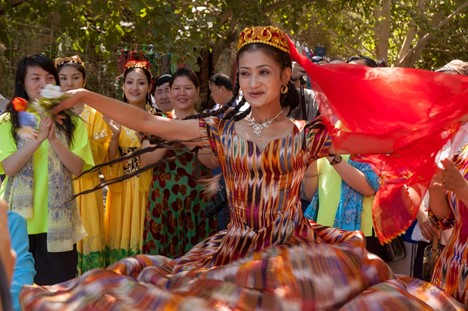
Ancient Chinese culture spans from 1600 -221 BC. Shang and Zhou dynasties ruled it and shaped it to give it a distinctive form. The Shang people ruled it from 1600 to 1046 BC. They introduced pictographic and other forms of writing, food, culinary styles, clothing and constructed large projects. Later, the Zhou era between 1046 and 221 BC continued following the traditions and cultural norms introduced by the Shang people. Although later invasions introduced changes in the original culture, its traces still exist and can be seen in Modern Chinese Culture.
https://www.chinahighlights.com/travelguide/ancient-chinese-culture.htm
Class activity: Divide the class into collaborative groups of four students each. Give each group a topic and an assignment for each student to write 250 words remarks, with each student providing at least one academic reference. Also, choose a leader who can synthesize all comments into one cohesive essay and submit it to the instructor.

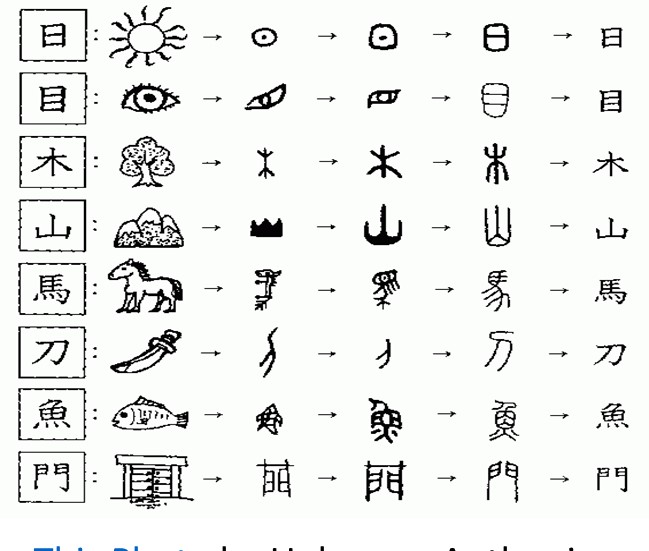
The following two illustrations of the ancient Chines pictographic writing forms that the Shang and Zhou introduced in ancient China.
https://www.chinahighlights.com/travelguide/ancient-chinese-culture.htm
Symbols were drawn to communicate meaning. These were inscribed on walls, stones, rocks, tree bark, and even tortoiseshell for preservation.
How Ancient is the Chinese Culture?
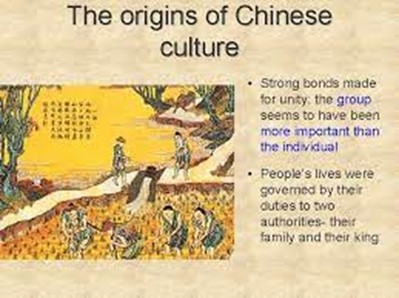
Historians believe that the Huaxia tribe was the founder of Chinese Culture. Ancient texts describe they lived hundreds of years before the Shang and Zhou dynasties. Therefore their existence dates back to pre-1600 B.C. This assumption is based on the writings of Sima Qian, who was the ancient historian during 130-81 B.C., a time that was almost a hundred years past the onset of the imperial era that started in 221 B.C. Records of the Grand Historia Shiji, written in 86 B.C. His work that was rooted in Confucius and other historians, was the foundation for Chines Culture. Shiji wrote about finding an earlier civilization and revealed their traditions, philosophy, and religion in writing biographies of famous people such as Huang, who defined ancient Chinese culture spanning over 2,200.
https://www.worldatlas.com/articles/a-brief-history-of-chinese-civilization.html
Class activity: Each student to make a timeline chart to show the reign of various dynasties.
Literature in ancient Chinese culture.
The Early Sages
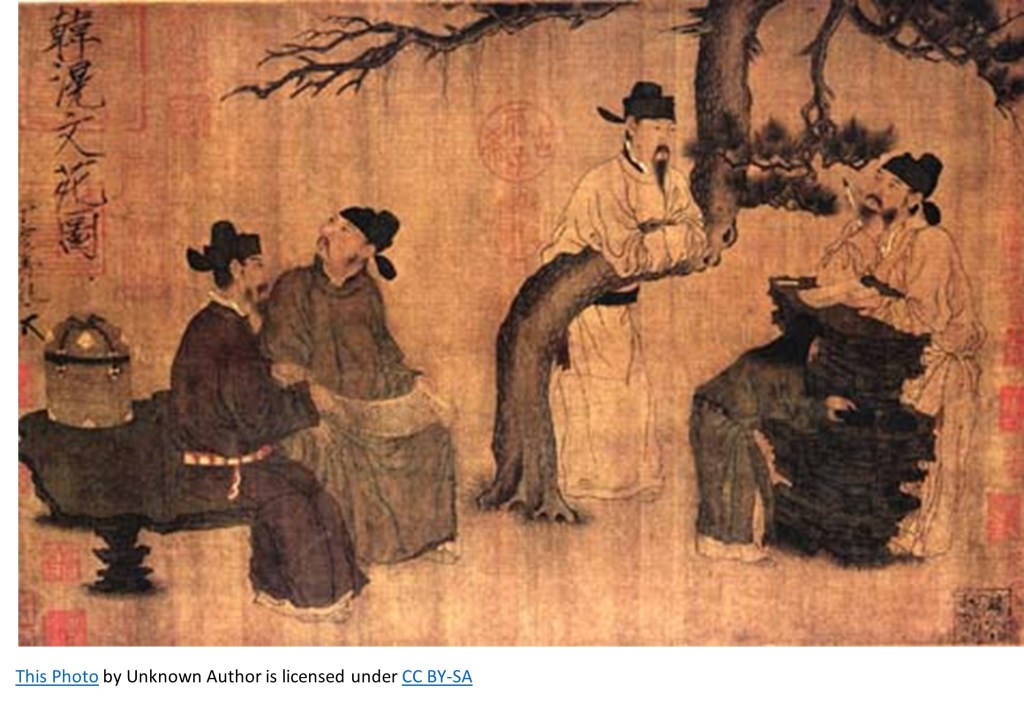
Various Chinese historians record the linage of sage rulers who founded the Chinese Civilization. The following table shows some prominent rulers and their contribution to Chinese cultural development.
| Fu-XI | Introduced the art of raising silkworms. She invented eight Tiagrams, consisting of symbols of consistent or broken (yin and Yang) lines, each that became the divination text, the classic of Changes (Yijing). |
| Shennong | Invented the Plow and introduced the use of herbs for medicinal use. |
| Huangdi (the yellow emperor) | He patronized medicine and Agriculture. |
| Cang Je | Invented writing by creating graphs the imitated the articulate tracks of birds. |
| Yao | He disinherited his incompetent son and instead chose a common, thus establishing virtue and merit over blood lineage. |
| Shun | Shun, the commoner, was a competent ruler who honored his parents even though they wanted to kill him. |
| The great yu | He worked hard for people’s welfare and irrigation by inventing a system of channels to harness the big floods that came in his reign. |
All these sage leaders laid the fundamental values of Chinese Civilization, giving importance to writing and divination, improving economy by emphasizing silk and agricultural production, and creating a political system that encouraged fixed social positions, self-cultivation, and use of herbal medicine.
Understanding Chinese Society through Ancient Sages
Imperial China.
After many centuries of Shang and Zhou rule, the Qin Dynasty destroyed the weak Zhou dynasty between 256 BC and 221 B.C. An important year in Chinese history when the King of Qin self-proclaimed himself as the First Emperor of Qin. Imperial China came into being in 221 B.C. The new government structure was a strong centralized bureaucracy adopted by the subsequent rulers of the Hans dynasty. The Qin dynasty ruled for a short period of 15 years (221 B.C to 206 BC), but China’s unification made it emerge as an empire, Imperial China. Many other disturbances and changes of the dynasty lasted another 2100 years until the Republican Revolution of 1911.

The Terracotta Army, dating from approximately the late third century BCE, were discovered in 1974 by local farmers in Lintong County, outside Xi’an
https://www.nationalgeographic.org/thisday/mar29/terra-cotta-warriors-found/hinese
Class Room Activities. Give students a quiz with the following questions. It will be an open book quiz with a time duration of 15 minutes.
Q!. How old is the Chinese Civilization? If the birth of Jesus is a reference point, How long before did the Chinese Civilization exist.
Q2. During what dynasty did Confucius exist, and what was the response of the various kings towards his teaching.
Q3. Why did Confucius emphasize the Master’s Teaching or the Works of the previous King sages?
Q4. What is the significance of the year 221 B.C? What transpired that year changed the course of the Chinese government structure.
Q5. How long was the reign of the Qin Dynasty?
The influential ruler of Hans.
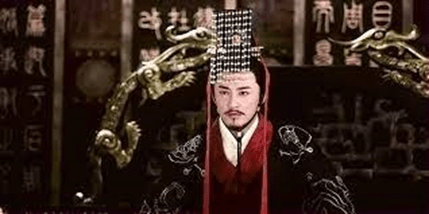
The most influential Hans ruler was Emperor WU(141-87 B.C.). He undertook expensive missions to expand China and established iron, salt, and liquor monopolies to finance his expansionist missions. In addition, he promoted arts and music and a patron of Confucian scholars.
Kings W.U. promoted education and established a state-sponsored academy to teach government employees in the knowledge of 5-Classics, which were as follows:
- A classic of Changes. They are used for divination.
- A classic of documents. A collection of proclamations by early sage kings and ancestors that recorded the history of Zhou.
- A classic of Poetry. A collection of poetry including hymns to the Zhou and the history of Zhou.
- Spring and Autumn Annals. A Historical chronicle.
- Record of Rites. An important among the books of ritual.
During the reign of Emperor Wu, Sima Qian (145 t0 86 B.C.) was also assigned the task of writing the history of China. The 1500 hundred years from the Shang dynasty to the end of the Hans dynasty provided a long-term influence in shaping the empire’s political institutions, Ideologies, moral standards, and social manners. It engendered a culture that would reflect these moral values in the literature produced. Literature produced at that time is still the authoritative foundation of Chinese Civilization. The significant works among the literature are the Classic of Poetry, the oldest East Asia poetry collection. The poems were written were a reflection of society. Some would convey the history of the old sage kings, their way of life, and the words of wisdom. Some were a subtle warning to the people relating the actual happenings or the way things have transpired or manifested in everyday life. The idea of relay these happening was to advance warn the people and especially the younger generation to learn from the experiences of others and to design their own in the light of lessons learned.
Classroom Activity:
Divide the class into two main groups.
Ask students in each group to write a 500 words essay on the following topic.
King Wu is considered the best emperor of the Hans Dynasty. Address how he was different from the other emperors and why he used the government monopolies to raise funds to pay for his ambitious projects. What was the nature of those projects, who benefited from those projects?
When completed, ask students to hand over their essays by swapping the articles to the left. Next, let students grade one another’s essays. In the end, reverse the swap so that everyone gets their papers back.
Classic of Poetry
The classic of poetry is a compilation of poems that form the foundation of Chinese literature. These are compact and evocative verses that often center around the love theme. There are a total of 305 such poems organized into three categories. (i) Guofeng, 160 poems called the “Airs of the domain (ii) Odes/, 105 poems of elegance, and 40 poems “The Hymns.” Tradition credits Confucius for the compilation of these poems. Confucius believed that the matters of the government depended upon the intellect of the society and thus thought it imperative that the individuals should be intellectualized and cultivate their minds with moral values so that they could contribute to the social order. Analects is the collection of Confucius sayings that praise poetry as a form of literature and tool of enlightenment.
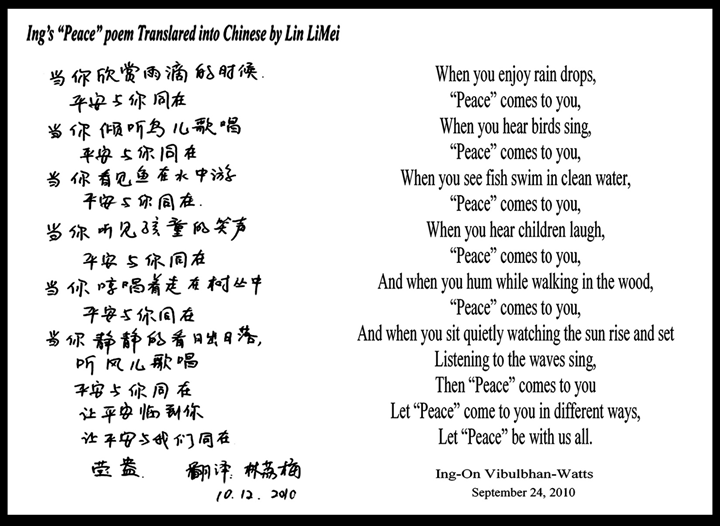
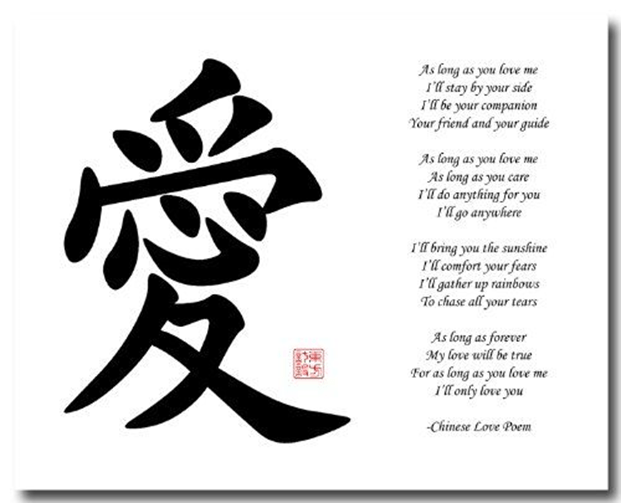
Modern Chinese poetry follows the same format where the poets paint a picture of what they see, observe, or even think. Writers in the Western culture believe that what a person writes is their representation of the real world. In other words, it’s the writer’s perspective of the world that then translates into words and present as their work. They term this visualization as Wen. But in Chinese literature, it is not the experience of the poet or an author but an actual manifestation of elements of the world that become known and visible that is Wen. In simple words, the Western school of thought considers the perspective or the way one sees and interprets an element is Wen. Whereas in Chinese literature, the way a thing happens or appears in existence is the Wen. It is not merely a thought or a concept of the writer but rather a description of something that was made visible and known. In this respect, the subjects of Classics of poems’ poems existed or existed somewhere in time and were thus accurate. Therefore, the words used and composed in the verses were narratives that reminded Wen to relay a message to draw an inference and learn from it.
https://archive.org/details/chineselovepoems00klem
As Long as you love me.
Understanding Chinese Society through Ancient Sages


 Shahzada Yaqoot
Leave a comment