Shahzada Yaqoot ENG-355
Week 3 Blog
Theme Move towards Democracy and modernization.
The Cultural Shift in China
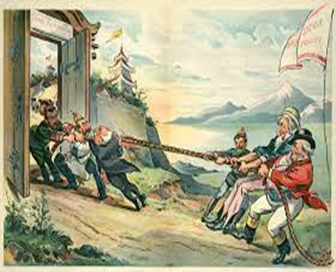
After enduring many centuries of Dynastic and Imperial rule of many centuries, Chine’s people started to awaken politically. They realized their need to challenge Confucianism and look more towards the West for scientific development, modernization, and Democracy. Thus, the period between 1910 to 1920 was the preceding decade in which Chinese philosophers, poets, authors, and thinkers started to infuse ideas of change into the minds of their people.
The following four revolutions were the result of the first decade preparatory movement:-
- Movement between 1912 and 1927. China was named the People Republic of China under the rulership of political leader Sun Yuxian.
- Revolutionary movement between 1928 and 1949 Mao Zedong starts his political struggle and presents a three-point document as his eleven-point manifesto political change. Finally, on June 30th, 1949, the Mao Chinese Communist party took over Beijing and announces the formation and control of the People’s republic of China.
- Movement between 1949 and 1961. The consolidation of China started, and the grand campaign was launched and then recalled because it failed to bring forth change.
- Movement between 1962 and 1976. There were many developments during this time, culminating in the death of Mao Zedong on January 8th, 1976.
Classroom activity.
- Research key happenings and advancements during the period 1928 to 1949
- Write a 500 words essay explaining the reasons for Mao Zedong’s advancement campaign failures?
- What did the Chinese Communist Party under Mao’s leadership manage to unify divided China? And take down the stronghold of the Warlords?
The great Chinese leader Mao Zedong brought in a revolution in 1949. And though he did face much resistance in capturing Beijing, his overall political struggle exceeded well over twenty years of

Class Activity.
- Research on the long political struggle of Mao Zedong between 1928 and 1949.
- Discuss the ideological difference between Confucianism and the teachings of Mao Zedong.
- Why did the Great leap forward industrialization campaign of Mao Zedong fail?
- Can Mao Zedong be held responsible for the death of millions of people who died of starvation because of his wrong policies?
The Enlightenment of Chinese People
The literary enlightenment of people started during the Mao’ in 1949 and continued through the decade of the 70s. The literature primarily meant for political awareness was made available to the common person so that their level of intellect could be enhanced. Literature written by the common class of people helped the party agendas get strengthened. In the first year of Mao’s rule, the First National Congress of Writers was convened, and the Federation of literature and Arts circle was formed. Various writers kept writing in genres like Socialist Realism, Politics, and some fiction.
https://www.britannica.com/art/Chinese-literature/1949-76
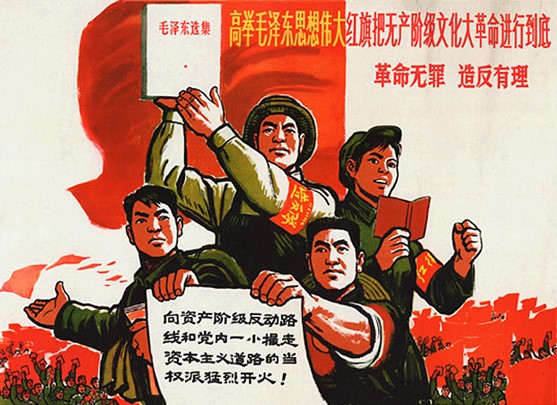
Backsliding from Confucius

With the widespread introduction of literature and many Modern era Chinese writers, poets, and playwriters, introducing thymes directed to ordinary people may have caused people to think aside from their traditional beliefs. As a result, writers like Ding ling, Zhou, and Zhang Ailing started to write fictional works that contradicted the conventional norms of society.
One such example is Zhang Ailings’ short story “Sealed Off.” It’s a fiction writing about the time of the Japan & China war, where people were traveling in a Tramcar that still had classes to accommodate the class society of China. The story describes how two strangers of opposite sexes initiate a conversation and end up sharing their lives and agreeing on continuing their relationship that would exist between an unmarried woman and a married man. The story’s contents imply how China has influenced the Modern and Postmodern era(after 1949) and how the writers were portraying their liberal thoughts in a generally conservative culture. https://psychomad16.wordpress.com/2016/03/16/sealed-off/
Another work of fiction of the postmodern literature influencing the Chinese Culture is a short story by a distinguished Chinese writer Lu-Xun. The story is beautifully crafted wherein a person had two brothers as friends. He hears that one of them had been sick and thus decides to see. He is met with the old of the brothers, who informs that his brother was no more ill. However, he hands over a written journal from his younger brother to read and know of his illness. The diary is divided into 13 sections, written in first-person prose, recording the thoughts of a person who has extreme fears and paranoia of others and believes that everybody was a cannibal and aimed at eating him. And though he reads the Confucianism all day, his mind sees “they will eat you” popping at him. His paranoia escalates, and he sees his brother, his doctors, neighbors, and the village he lived in as cannibals. He then even associates the death of his little sister as a victim of cannibalism by his brother.
Such fiction by Lu Xun was a clever plot of writing and presenting inner thoughts or soliloquy of a paranoid person. It was a plot that did not have roots in the traditional Chinese writing genre but a concept derived from a Western idea.
https://www.jstor.org/stable/462876
Cultural and literary development.
With open door policy, import of Western goods, and having access to Western media through satellite Television programs, the internet, and publications, it did not take long for people in China to become acquainted with the lifestyles of the developed Western countries. With access to wealth, the upper-class Chinese became consumers of luxury goods. Soon the society was introduced to Western Franchises of everything from Automobiles to Fast food. Western education also became accessible, and Chinese students hailing from the upper class of China started to study in universities of North America and Western Europe. The Chinese media noted and started writing the pros and cons of adopting new ideologies. The various authors, and poets, for which China had been historically famous, started comparing China’s ancient doctrines and the 21-century ideas, norms, social practices, and Western lifestyles.
English and other Western language publication became availablinese readers and enabled them to know of affairs of the world and gave awareness about the education, fashion, sports, politics, business opportunities, habits, and liking of the people around the world. In addition, the thinkers in Chinese society wrote articles and short stories with plots built around the social changes. However, they thought they were drifting the young readers away from the traditions of the Chinese culture and especially the teachings of the sages, like Confucius, whose classics had been the source of literacy for the Chinese intellectuals.


Classroom Activity:
- Students must visit their local city library and find the availability of Chinese publications.
- Create a collaborative of 4 groups and discuss how the Poets and Authors impact their society.
- Discuss the writing styles of modern-day Chinese authors and compare their thoughts with the contemporary American and European writers.


 Shahzada Yaqoot
Leave a comment